



This week, I joined a coalition of journalists in Washington, D.C., to speak directly with lawmakers about a crisis unfolding in plain sight: the rapid disappearance of local, community‑rooted journalism. The advocacy day, organized by the Hispanic Technology & Telecommunications Partnership (HTTP), brought together reporters and media leaders who understand that the future of local news is inseparable from the future of American democracy.
- YouTube www.youtube.com
HTTP Executive Director JudeAnne Heath clearly captured the stakes. “This advocacy day is about protecting local news as civic infrastructure, not corporate content,” she told lawmakers. “When media ownership becomes too concentrated, decisions about what communities see and hear can be driven by company priorities instead of public need… If waivers or exemptions are handed out to circumvent the law, it's a slippery slope for all mergers across all industries.”
Her warning mirrors what senators themselves raised during Tuesday's Commerce Committee hearing. Lawmakers questioned whether eliminating the national ownership cap would undermine local journalism at a moment when communities are already losing reporters at alarming rates. As The Hill reported, several senators expressed concern that the Nexstar–Tegna merger “stirred questions about the future of local news and media competitiveness” during the hearing.
Critics of the proposal, including Newsmax CEO Chris Ruddy, argued that removing the ownership cap would give major broadcasters outsized influence and leave smaller, independent media companies struggling to compete for audiences and advertising revenue.
“We need more independent media and more competition, not less,” Ruddy said, testifying before the panel. “Large station groups hold enormous leverage over pay TV operators through retransmission fees.”
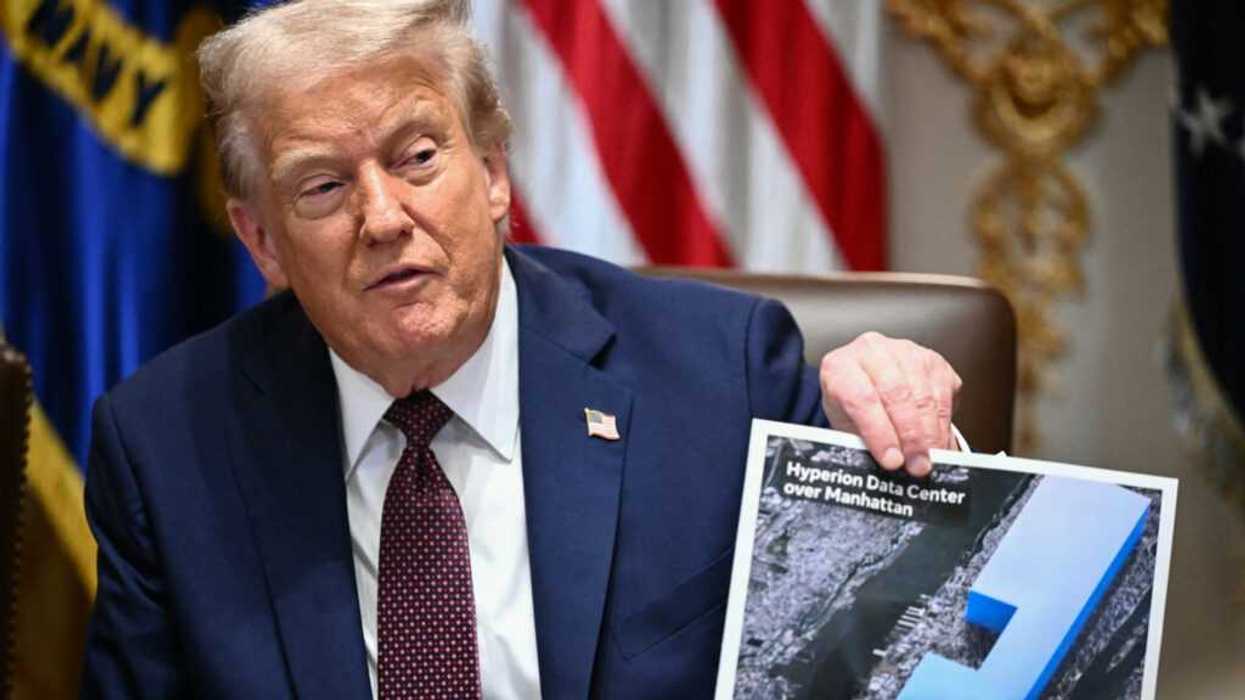
The hearing also highlighted the political pressure surrounding the deal. President Trump has urged regulators to approve the merger, calling it a way to “knock out the Fake News” and expand competition. But senators from both parties pushed back on the idea that the FCC should simply clear the path. One lawmaker cautioned that eliminating the cap outright would “further weaken local TV news” at a time when many communities have already lost their last remaining newsroom.
 Senate Committee on Commerce, Science, and Transportation ranking member Sen. Maria Cantwell (D-WA) (R) questions witnesses during a hearing in the Russell Senate Office Building on Capitol Hill on February 10, 2026 in Washington, DC. The hearing explored the proposed $3.5 billion acquisition of Tegna Inc. by Nexstar Media Group, which would create the largest regional TV station operator in the United States. (Photo by Chip Somodevilla/Getty Images)
Senator Maria Cantwell of Washington also warned that large‑scale media consolidation would reduce, not expand, the number of journalists serving local communities. She pointed to Nexstar’s history of merging newsrooms in markets where it controls multiple stations — including Denver — as evidence of the likely impact.
“That is not more local voices; it’s fewer,” Cantwell said.
These concerns aren’t abstract to me. I’ve lived through a major merger myself. In 2001, when General Electric–owned NBC purchased the nation’s second‑largest Spanish‑language broadcaster, Telemundo Communications, I saw firsthand what consolidation looks like. The layoffs came quickly. I was one of them. I watched culturally essential reporting for Latino, rural, and other underserved communities disappear. Consolidation doesn’t just reduce headcount — it narrows perspectives, weakens oversight, and leaves entire regions without journalists who understand their communities.
That’s why I’ve been blunt: media consolidation is a short‑term economic solution to a long‑term economic problem created by C‑suite leadership who are more interested in serving their Board of Directors than the public they’re licensed to serve.
When I served as president of the National Association of Hispanic Journalists (NAHJ), I spent years fighting to stop this pattern from repeating across the country. And this year, NAHJ launched Holding the Mic, a year‑long national tour on the future of Latino journalism. The first event kicked off on Monday at the National Press Club in Washington, D.C., with a panel on media consolidation and democracy as part of the Save Local Newsrooms: Community-Centered Media Hill Advocacy Day hosted by HTTP.
"Latinos are at the center of many of the most consequential stories in America, yet decisions about the future of journalism are too often made without us," said Yaneth Guillen-Diaz, Executive Director of the NAHJ. The Holding the Mic tour is elevating community voices, exposing structural barriers in the industry, and making clear that the health of local news is a national concern — not a niche issue.
That national concern is now squarely before federal regulators. The proposed Nexstar–Tegna merger would allow a single corporation to control 265 television stations and reach nearly 80% of U.S. households. No matter how it’s framed, that level of concentration is incompatible with a functioning local‑news ecosystem. It would accelerate the collapse of local journalism at a moment when communities need it most.
Congress has the tools — and the responsibility — to intervene. That means:
- Upholding the 39% national ownership cap
- Strengthening oversight of TV‑station mergers
- Protecting and investing in local media
- Expanding media‑diversity and ownership opportunities
These are not abstract regulatory questions. They determine whether people in small towns, border communities, and multilingual neighborhoods have access to trustworthy information — or whether they are left with a hollowed‑out media landscape dominated by national narratives that ignore their realities.
When local journalism erodes, so does democracy. A healthy democracy depends on reporters who know their communities, reflect their diversity, and hold power to account. Our communities deserve real, trustworthy news and equitable representation — the kind of journalism that keeps democracy alive.
Strengthening local news is strengthening democracy.
Hugo Balta is the executive editor of The Fulcrum and the publisher of the Latino News Network, and twice president of the National Association of Hispanic Journalists.